

1
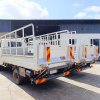
I’ve been using tail lifts for many years, and in real freight environments one thing becomes increasingly clear: most so-called “failures” are not sudden breakdowns, but the result of long-term usage habits gradually accumulating over time.
First is ground condition, which is really critical in real operations. No matter what type of tail lift system it is, if it is operated on soft ground, uneven loading docks, or sloped loading areas, there may be no immediate issue, but the stress will gradually shift toward hinge points and structural connection areas. Over time, this leads to irreversible fatigue wear.
Second is hydraulic usage behavior. In many on-site operations, people tend to use the tail lift as a temporary load-bearing platform, leaving cargo on it for long periods. However, a tail lift is fundamentally a lift-cycle structure, not designed for long-term static load. Continuous loading increases stress on hydraulic seals and the oil system, accelerating aging.
Third is load distribution. Off-center loading is almost unavoidable in real loading and unloading work, and when forklift operations are rushed, misalignment happens easily. Once the center of gravity shifts, additional torsional stress is generated during lifting. This stress does not cause immediate damage, but repeated exposure over time will definitely accelerate structural fatigue and increase clearance.
Another easily overlooked point is early condition changes, such as slower lifting speed, delayed response, or changes in hydraulic noise. These are all signals that the system condition is changing, but in actual operations they are often ignored until the problem becomes obvious.
Maintenance follows the same logic. Tail lifts operate in relatively harsh environments, with dust, oil contamination, vibration, and frequent impact loads. Without basic cleaning and lubrication, wear concentrates at hinge points, rollers, and guide structures. Many so-called “hydraulic failures” are essentially the result of long-term accumulated mechanical wear.
From practical experience, tail lifts rarely fail suddenly. They more often degrade gradually until reaching a critical point where the issue becomes noticeable. What truly determines service life is not the brand itself, but operating practices and maintenance habits.
Finally, in real projects we have used different tail lift systems, including some mainstream European brands, as well as our own Beauway tail lift configurations. The overall observation is consistent: differences between equipment exist, but what really creates the gap in service life is always operating conditions and usage behavior.
Last edited: