
Real-time truck tracking

Salma

Well-Known Member
Jan 16, 2009
702
296
63
20
Now that ELDs have been implemented I find that everyone and their brother wants to be able to track our trucks in "real-time" through gps, eld access, driver's cell phone access, etc. As a carrier, we have access to the real-time info of our trucks and I should be able to relay that info to our customers without giving them direct access. Providing tracking updates to our customers 2 or 3 times each day is more than sufficient. It has worked up until now so I fail to understand this sudden urgency.
I am extremely uncomfortable with this! Just because we are in the transportation industry, why do privacy rights suddenly get thrown out the window?! And exactly who are these "companies" that are going to be in charge of the monitoring and tracking? Am I just supposed to give them access to my truck's data because my customer says so?

What are the safeguards, if any, and does this "tracking" continue even if our truck is not hauling a load for the particular customer who has already been given access to our truck's data? Is there an on/off switch that I can control? If I feel that the "access" is being misused can I "block" these people? Or is it like Google - even if you block and disable all apps and notifications, they still manage to sneak through!
Unless you are hauling some sort of top secret government load, no one needs to know the location of the truck every second of every day.
Maybe I'm just being paranoid but I wonder how the rest of you feel about this? For those of you who are already granting real-time access to your customers, are you able to control it at all? What are the "rules", if any?

I should mention that we are a very small carrier and we don't have one of those fancy dispatch/tracking computer programs. We would have to allow access through the eld, gps or the driver's cell phone.

I feel like I'm rambling on and maybe making no sense at all but this is really rubbing me the wrong way. I don't have enough information yet to make an informed decision about all of this so that is where I hope all of you can help me out.
 
Tracking has become a hot button issue lately and even more so now that freight costs have increased for so many shippers so they demand better value for their money. Courier companies have offered this service for many years - you type in a number on their website and you would see all the mileposts for the item. Large carriers have also provided this information via EDI to some of their bigger customers (Big 3 auto etc).

Lately some software solutions (MacroPoint) has come up with a solution that gives brokers a tool to manage their check calls. They expect the carrier to have the driver load an app in their phone so it can be checked in realtime. It serves a purpose and like you said, if you were hauling a top secret load, it might be a cool tool. The flip side is that if some rogue employee in the brokerage wanted to steal a load, they'd definitely have a tool to identify exactly where it is. It also leads to arguments where the broker calls at 2am saying that the drivers 10 hours are up and he should get going.

This leads us all to asking the question about the rules but there are none. If you agree, then you take your chances. If, in the Macropoint example above, you leave your app on, the broker can see exactly where the driver goes next to load and there is an opportunity for the broker to send out a salesman to that exact GPS location. If the driver leaves it on indefinitely, the data of all his stops is available.

I am currently looking at a solution that will allow me to turn on/off the visibility of our trucks ELD. It sounds good but the middleman will have all the data for all the trucks but we can turn off the visibility of this for a specific customer/broker/user. Next will be integrating it into our TMS system so that when we schedule the pickup it gets turned on and when the delivery is complete it will automatically turn off. It will also change the truck ID should we switch tractors. The intention of this solution will be only for direct customers (ie no brokers).

I am also 90% complete for putting our tractor positions with 2 hour updates on our website for brokers to view. We hope this will minimize the check calls in the morning from those brokers.

In the end, I will not allow a direct connection to our ELD/cellphone data for a broker or customer. The risk is too great that the information will be misunderstood, shared, or disseminated. It is for my staff to view with the relevant contexts that my staff knows and does not leave the office.

I hope other carriers will agree and join me in requesting that if they want my data, they'll call to get it.
 
  • Like
Reactions: acard and Salma
A well thought and reasoned approach Jim L. As you described, there has to be a balance between providing real time, current info to your customers, both direct and brokers, and protecting your proprietary data from misuse. Shippers are constantly demanding their transportation providers to be more and more technologically equipped, so like it or not, this is the future. From a brokers perspective, there is nothing I would like more than to get rid of the numerous, repetitive, occasional inefficient morning and afternoon status check calls. It's irritating to our suppliers and my employees could use that time for more productive activities.
 
...Lately some software solutions (MacroPoint) has come up with a solution that gives brokers a tool to manage their check calls. They expect the carrier to have the driver load an app in their phone so it can be checked in realtime. It serves a purpose and like you said, if you were hauling a top secret load, it might be a cool tool. The flip side is that if some rogue employee in the brokerage wanted to steal a load, they'd definitely have a tool to identify exactly where it is. It also leads to arguments where the broker calls at 2am saying that the drivers 10 hours are up and he should get going....

I received an email today from a load broker that we do a lot of business with and they will be using MacroPoint for ALL carriers, going forward. The email basically says: "if you don't do this, we won't be working together anymore." I wouldn't be so hesitant if we had full control of the access that this company would have to our truck and driver data. The email had a link to MacroPoint's FAQ page and a choice of whether we want to use the ELD/GPS to connect to their system or the driver's cell phone. That's it.... no discussion.... no questions or concerns allowed... just do it.
 
With the amount of good freight out there, who needs to give there drivers position through Macro Point. We don't and won't allow it!!, There is now way of knowing the broker has turned it off once the load is delivered, as said earlier, maybe they are following your truck right into the next pick or drop with a salesman.
 
  • Like
Reactions: Salma
there is nothing I would like more than to get rid of the numerous, repetitive, occasional inefficient morning and afternoon status check calls. It's irritating to our suppliers and my employees could use that time for more productive activities.

Remember, these check calls have become a way of life because the broker could not trust the carrier to complete the job effectively. The check calls were a way to poke the carrier to check his driver to make sure he was on time and identify if there was a problem. It became a way to know the problem before the beneficial freight owner would find out about them.

A carrier who is on time 99.9 percent of the time, and communicates any challenges at the time they occur, would not need a check call. Some brokerages have a team of people doing this which is a cost that has to be absorbed by the freight paying community. Over the years, freight has become a commodity where most people just posted the load, gave it to a carrier. They didn't really know the carrier so they implemented a solution to cover their bases for all loads.

My question is, if shippers are demanding this, is it because a carrier puts it on their pamphlets and business cards and expect all carriers to have it? Do these shippers actually go out to the website and gather the information if they have it? In my experience, all my customers who ask for it find it easier to just call/email for the one time that they need it. Very rarely do they check the website after the third week - they have bigger problems to solve then to see if my truck is in the place it should be.
 
  • Like
Reactions: MikeJr
I received an email today from a load broker that we do a lot of business with and they will be using MacroPoint for ALL carriers, going forward. The email basically says: "if you don't do this, we won't be working together anymore." I wouldn't be so hesitant if we had full control of the access that this company would have to our truck and driver data. The email had a link to MacroPoint's FAQ page and a choice of whether we want to use the ELD/GPS to connect to their system or the driver's cell phone. That's it.... no discussion.... no questions or concerns allowed... just do it.

We have seen similar brokers with their demands. Like @loaders said, it would be nice to have all the data in one spot. It comes with a price and I guess that is what we have to decide if its worth it.
 
With the amount of good freight out there, who needs to give there drivers position through Macro Point. We don't and won't allow it!!, There is now way of knowing the broker has turned it off once the load is delivered, as said earlier, maybe they are following your truck right into the next pick or drop with a salesman.
Exactly! We will not allow it either!
 
Most, if not all of these technologies are usually implemented first in the US, and Canada plays catch-up. Large international shippers are aware of them and eventually their Canadian branches are required to adopt them as well. As a transportation provider it is your decision to participate or not. From the comments above, it would appear that some carriers will remain reluctant to do so until there are sufficient safeguards in place, something that will most likely happen. The industry is driven by the consumers of the product we provide, not the other way around. If the requests for these new services are coming from a freight broker, you can be sure it originated with one of their larger customers.
 
Jim L very insightful today, we find it is only brokers not customers asking for this and I agree with Jim L that is because they use anyone who is breathing (barely) and this is the only way to track the shipments outside of just crossing their fingers. We just say that we do not pay for our drivers phones so no they cannot get access and have yet to lose a load.
 
Most, if not all of these technologies are usually implemented first in the US, and Canada plays catch-up. Large international shippers are aware of them and eventually their Canadian branches are required to adopt them as well. As a transportation provider it is your decision to participate or not. From the comments above, it would appear that some carriers will remain reluctant to do so until there are sufficient safeguards in place, something that will most likely happen. The industry is driven by the consumers of the product we provide, not the other way around. If the requests for these new services are coming from a freight broker, you can be sure it originated with one of their larger customers.
I agree that it is usually customer driven but I believe that often it is a 'best practice' scenario with a checkmark box on the carrier profile sheet. The same way that other items are requested such as C-TPAT, CSA, Bonded, Smartway, EDI, Hazmat etc. It doesn't necessarily mean that its a requirement but identifying if the carrier can offer other services.
I still stand by the fact that even if tracking was offered, how often would they check a website for the position of the truck? The assumption should be that the service expectations on the carrier are going to be met and exceptions should be communicated.

From experience I know that a solution where you offer to a customer to see the position of the truck will be utilized only a few times(usually at the beginning because its cool to see), causes confusion from the customer, creates an argument should there be a exception, diminishes the carriers service offering and finally provide a service to which you have trouble monetizing. These tools should only be used by the carriers people to assist in providing excellent service. I have experienced all these first hand because I thought it'd be cool and offered this about 7 years ago when we put in trailer tracking. It was a lot of money spent with no added revenue for the service and a lot of headaches with training/questions for the customer to only look at it once in a while. In the end we discontinued the service.
.
 
Couldn't agree more Jim L. It is one of many "markers" large shippers use to measure their carrier base. This discussion did get me thinking more about the check calls brokers make every day. For a carrier, who on any given day is carrying perhaps 10 or more broker's shipments.......that's a lot of check calls to respond to which explains the frustration seen on this site regarding brokers in general. Believe me, I would much rather have my staff sourcing new business or performing other, more productive activities. Certainly if all carriers could provide 99.5% on time service, we wouldn't need to make these calls. Unfortunately, not all carriers are as professional as the ones Jim L has described, nor are they as numerous. Perhaps in the future, someone will develop a system that would allow a broker/shipper to track a shipment, but only while that shipment is on the truck. In other words, once the shipment is accepted the carrier provides a "password" to log on and track up to final delivery. Have an expiration for the password, maybe based on the anticipated transit time. Maybe make it a valued added service, an accessorial charge available for an additional fee. If I have a particular customer that requests it, we add the cost into their rate. I wish I was more tech savvy( and obviously much younger), maybe I could develop such a system. Then again.....probably not!
 
Couldn't agree more Jim L. It is one of many "markers" large shippers use to measure their carrier base. This discussion did get me thinking more about the check calls brokers make every day. For a carrier, who on any given day is carrying perhaps 10 or more broker's shipments.......that's a lot of check calls to respond to which explains the frustration seen on this site regarding brokers in general. Believe me, I would much rather have my staff sourcing new business or performing other, more productive activities. Certainly if all carriers could provide 99.5% on time service, we wouldn't need to make these calls. Unfortunately, not all carriers are as professional as the ones Jim L has described, nor are they as numerous. Perhaps in the future, someone will develop a system that would allow a broker/shipper to track a shipment, but only while that shipment is on the truck. In other words, once the shipment is accepted the carrier provides a "password" to log on and track up to final delivery. Have an expiration for the password, maybe based on the anticipated transit time. Maybe make it a valued added service, an accessorial charge available for an additional fee. If I have a particular customer that requests it, we add the cost into their rate. I wish I was more tech savvy( and obviously much younger), maybe I could develop such a system. Then again.....probably not!
We are seeing this done by shipper (customer) supplied GPS tackers placed with the cargo. This way there is no need to affect the carrier or involve them anymore then notifying them of it's presence. With lithium batteries they will last beyond the transit time. I believe if the customer (not the broker) is truly concerned about the location of their product I'm more than happy to have them place a tracker within their freight.
 
I have heard about this type of tracker, but have never used one. Problem would be retrieving the device after the delivery. If shipper and receiver were the same or a related company, no sweat. If they weren't, it could be troublesome.
 
With a tracker of that sort you need the receiver to just drop it in the mail and get it sent back to you.
 
I have heard about this type of tracker, but have never used one. Problem would be retrieving the device after the delivery. If shipper and receiver were the same or a related company, no sweat. If they weren't, it could be troublesome.
We have had these devices many times in the freight. They are nice and they sit on top of one of the skids shrink wrapped to the product. There is no worrying about it because the shipper/receiver can work out something to get the tracer back.

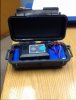
We have also seen a lot of black boxes that are attached to the bottom of the trailer. A shipper will come out and say that he has to put on the seal but he attaches a black box to the bottom of the trailer that is held by an amazing set of magnets. The driver pulls ahead, takes it off at the next stop sign and disconnects it inside, we collect them here at dispatch but nobody ever has asked for them. They're cool devices in an amazing case that is rugged - a real black box.
 

Attachments

  • BB1.jpg
    BB1.jpg
    50 KB · Views: 27
  • BB2.jpg
    BB2.jpg
    46.3 KB · Views: 28
  • BB3.jpg
    BB3.jpg
    52.8 KB · Views: 28
  • Like
Reactions: bellcitytransport
Overkill in my opinion. But its going to happen, and this is just the very beginning. In five or ten years all data you might possibly want to look at about the driver and the truck will be readily available in real time.. location, tire pressures, driver's blood pressure, oil temp.. reefer temp.. etc..
 
Everything but the drivers blood pressure is available today, outside of camera's the best investment lately is tire monitoring we get a message when the pressure goes 5% under pressure and has saved us a ton on tire repair calls in the US.
 
  • Like
Reactions: Igor Galanter
@Jim L ... Jim, as a former MacroPoint account holder and current MacroPoint user, I can tell you that's not exactly the way MacroPoint works. MacroPoint works by geofencing. When your truck enters the loading point geofence it triggers the track to start. Similarly, when your truck leaves the unloading geofence it triggers the track to stop.
One of my customers is a big user of MacroPoint, but our drivers no longer officially have cell phones, and I'm not about to divulge their personal phone numbers. My back office and MacroPoint have custom triggers that convert Peoplenet Workflow tracking to MacroPoint tracking for the customer's use. We are in control of the outflow of information, not the other way around, and the system only sends my customer the information that pertains to him/her. The system is redundant because the start and end of the tracking triggers exist in both the back office software and the MacroPoint software.
As a matter of policy, my customers do not have direct contact with my trucks and drivers.